Are Webb’s Colours Real? Four Questions for Reading a Space Image
James Webb's infrared data is converted into visible colors. Learn to read together the target, vehicle, filter, and date information in color space visuals.
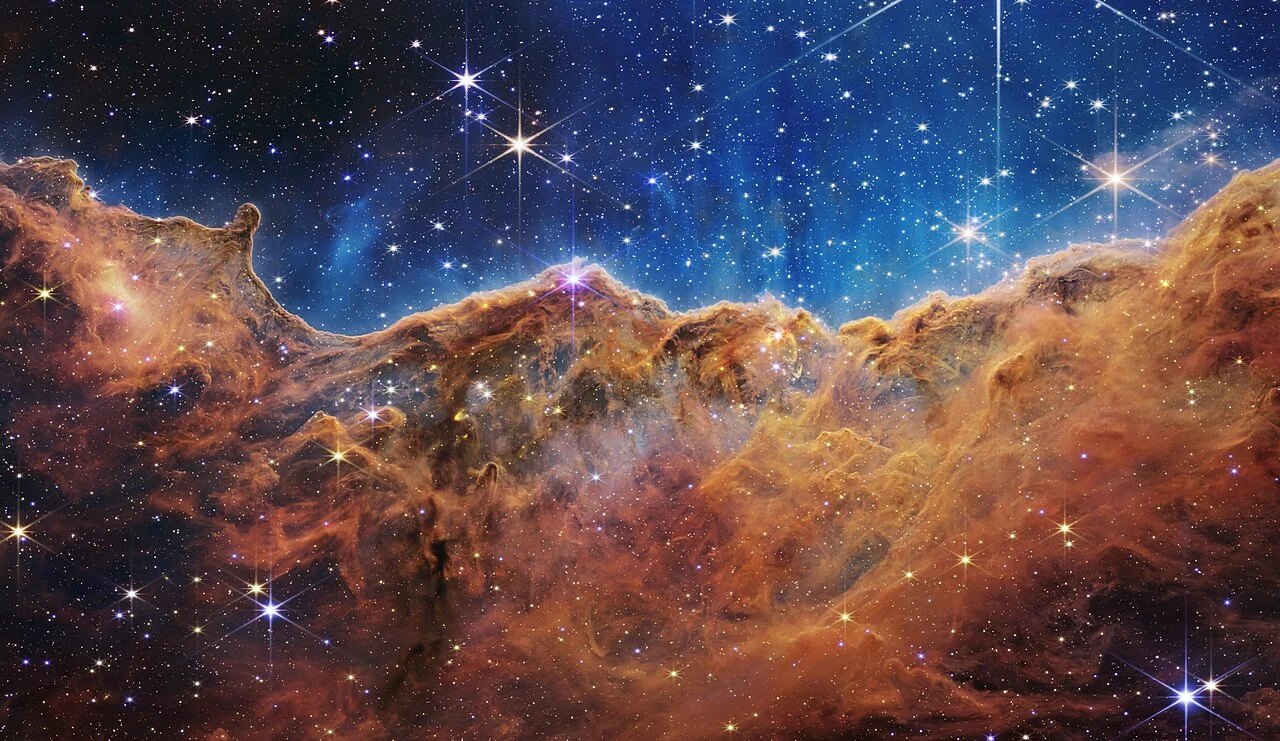
It's natural to look at a space visual and ask, 'Is this the way I would see it if I were there with my eye?' but with a scientific visualization based on actual data, it's not the same as the color that the human eye sees directly. In James Webb's images, color is part of making information visible that our eye can't perceive.
The first question is: What light was observed?
NASA's description of image processingIt describes Webb observing infrared light and matching images from different filters to visible color channels. Since we can't see infrared light directly, it is necessary not to interpret the colors on the screen like the colors of ordinary phone photo.
This process does not mean that the image is imaginary. It requires understanding what method the data is shown by. Using the phrase 'Color added' as a proof of forgery alone confuses the form of presentation with scientific measurement.
The second question is: What data do colors correspond to?
NASA explains the chromatic pattern in which shorter wavelengths are usually mapped to blue, longer ones to red. The number of filters used and the method of merging can vary according to the visual. Therefore, do not automatically accept that the color in another image has the same physical meaning.
Type the name of the target in your own reading note, the tool used, and the filter information given in the description. If there is no note describing the color, do not subtract a specific element, temperature, or distance result from the visual alone. Leaving the space you don't know empty is worth more than a guess that looks beautiful.
Question three: Is visual and news on the same date?
The updated date of a page does not have to be the date on which the observation was made or the first image was published. Read the different date fields on the page separately when sharing. Do not present an old archive image 'just taken'.
You can create an original check card: date of observation, date of publication, date of page update, and the statement I will use in sharing. Don't make it up if one of the dates is not available. The phrase 'image in NASA's archive' is more accurate than a claim of innovation you can't verify.
Question four: Does the description say what the visual doesn't show?
Remember that a close plan does not represent the entire sky, but that the frame and scale are separate information. Specify this if you share a cut section of the image. Compare the description of the low-resolution copy you received from another account with the original source.
The cover features a colorful visualization of the James Webb Space Telescope's observation of NGC 3324 Cosmic Cliffs. The visual source and usage information are listed below the photo. Good science sharing is to be able to explain what it is based on and how to read it before choosing the brightest visual. It's not a curiosity-reducing approach, it's an approach that grows with more accurate questions.
Resources
- NASA - How Are Webb's Full-Color Images Made? · 6 October 2026