OpenAI Agents API Enters Public Beta: Infrastructure for Long-Running AI Agents
OpenAI announced the Agents API as a public beta, which opens long-term agent working logic in the Codex infrastructure to developers. The new structure focuses on tool usage, context management and long mission flows.
Bu içerik, OpenAI kaynağı temel alınarak hazırlanmıştır. Kaynağı incele ↗
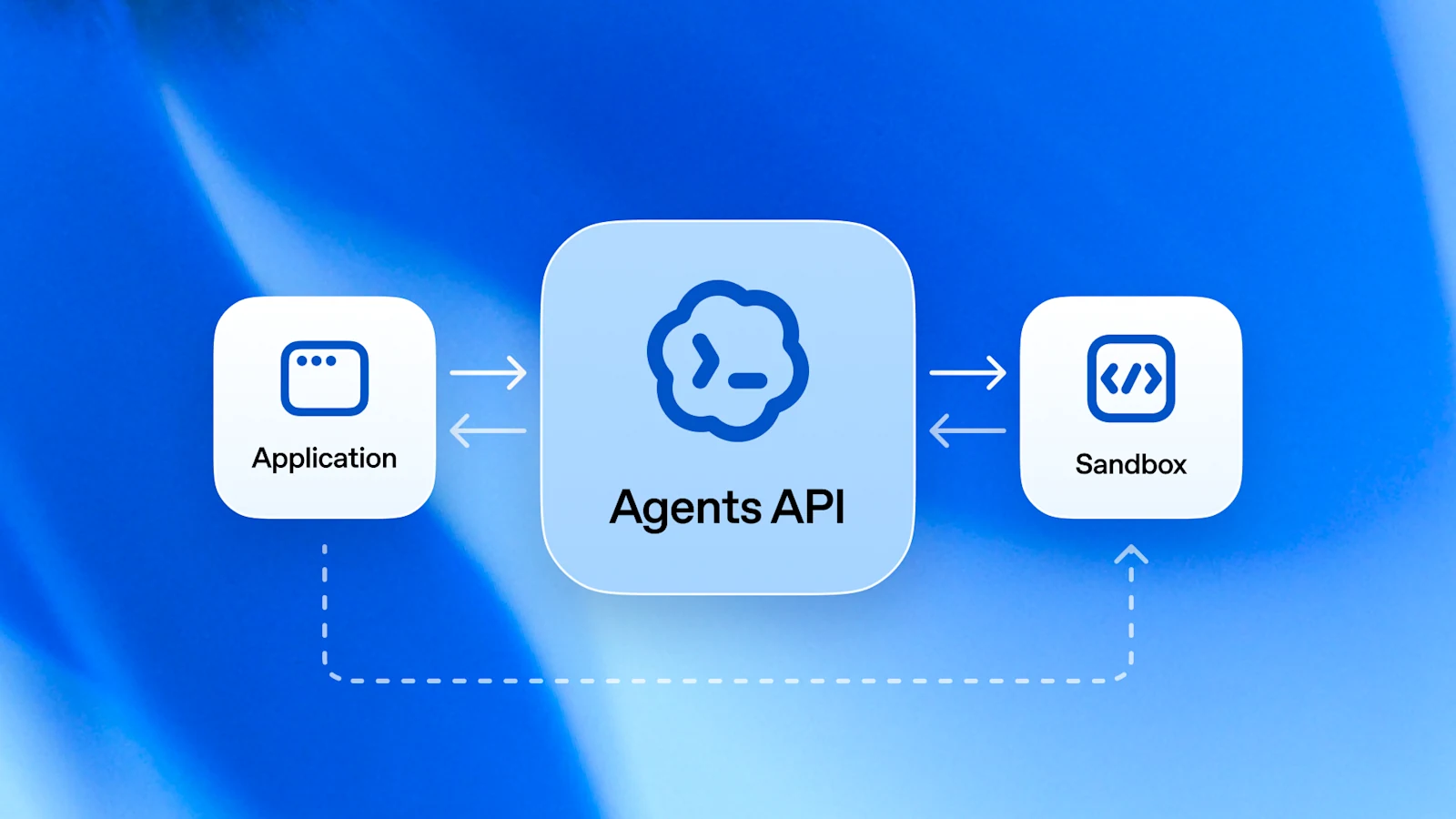
OpenAI announced the Agents API in public beta on 10 September 2026. According to the company, the new API gives developers access to a version of the agent infrastructure used for Codex and ChatGPT for Work.
What does the Agents API change?
In a classic language model API, the developer often has to set up layers on their side, such as session management, tool calls, task status, and tracking of long operations. The basic claim of the Agents API is to collect much of this orchestration under a managed service.
OpenAI emphasizes that context management, efficient use of tools, sub-agent coordination and environments that can work on files or code are important in long-term agent tasks. Therefore, the Agents API should not be considered as a classic chat endpoint that only responds to a single request. The target is agent applications that can reliably handle longer workflows that can take hours or even days.
Codex experience moves to the developer side
OpenAI's statement states that the Agents API benefits from the harness and infrastructure running the Codex, which means developers can manage task, tool, and context logic from a higher level rather than installing an agent loop from scratch.
In practice, this approach is particularly important in scenarios that require continuity rather than a one-time response, such as research, coding, file processing, data collection, and multi-step office processes.
Not every automation is "agent"
The critical point here is that it is not necessary to spy on everything. Classic automation for a simple API call or a few steps of deterministic workflow can still be simpler and cheaper. The actual value of the Agents API occurs in processes that need to decide during the task, select tools, record intermediate results, and, if necessary, be divided into subtasks.
So the new question for developers is not "can I use agent?", but "does this task really need agent architecture?"
What does it mean for content producers and small teams in Turkey?
Such managed agent infrastructures do not concern large software teams alone. In repetitive jobs such as content research, product comparison, report preparation, code auditing, or document processing, small teams may also be easier to develop their own special agents.
Nevertheless, in the production environment, cost, data access, error control, human approval and authority limits must be designed separately. The fact that the agent can work for a long time does not mean that each decision is automatically correct or secure.
The Agents API is currently in the public beta phase, so current documentation, pricing, and supported tools need to be checked before they can be put into the production system.
Resources
- OpenAI · 3 October 2026