AC and DC Charging for Electric Cars: kW, kWh and Charging Time
The large kW value on the charger alone does not tell the filling time. Separate the power, battery capacity and the energy you want to add with a simple sample.
In electric car conversations, two numbers are easily mixed together: kW and kWh. When you separate the amount of energy in the battery by charging power, you read the value at the station more accurately. Seeing a large power figure does not mean that the vehicle will receive that power continuously throughout the charging.
The kWh speed can be thought of as the kWh quantity
Kilowatt refers to power; kilowatt-hour refers to the amount of energy. When calculating, consider how much energy you want to add to the battery, what average power that energy will be transferred with, and the actual conditions separately. A sentence such as "Bataria 60" is incomplete when the unit is not specified.
As an analogy, you can think of the amount of energy to fill, and the power as the speed of the flow. This is for the sole purpose of explanation; the behavior of the electric car battery is not exactly the same as a water tank.
The main distinction between AC and DC
AC stands for alternating current; DC stands for direct current. The U.S. Department of Energy's AFDC guide classifies AC charging and DC fast charging separately. The same guide states that the time depends on the battery's initial occupancy, capacity, in-car charging capacity, and characteristics of the charging equipment. Official technical statement
The source describes the U.S. infrastructure. Do not use the socket, voltage and connection standard examples there as a description of an installation in Turkey. Based on the technical documentation of the vehicle you will be using in Turkey and the connection information of the station operator.
Example: Increasing from 20 to 80
Consider a hypothetical battery with a usable capacity of 60 kWh. Charging from 20% to 80% means adding 60% of its usable capacity:
60 ⁇ 0,60 = 36 kWh.
If the average power was constant 11 kW, the ideal mathematical time would be 36 ⁇ 11, i.e. approximately 3 hours 16 minutes. This is not the measured result for a particular car. It is an example of an explanatory calculation that excludes losses and change of power.
For the same 36 kWh, assuming a constant average power of 100 kW, the ideal time will be 21,6 minutes. The critical word here is "average". It may be misleading to put the maximum value written on the station directly into this account.
Why is station power not enough by itself?
AFDC explains that charging power can vary depending on the vehicle and battery's occupancy. So don't assume the average power of the entire session is the same as maximum power. Compare the data seen on the vehicle screen or at the end of the session with the conditions provided by the manufacturer.
In a travel plan, it is more useful to consider not only the "full occupancy time", but the need for enough energy for the next stage. Evaluate together the time spent on the stop, the need for a break and whether the station is available at the time.
What do you record before you leave?
Note the connection the vehicle supports, the AC and DC technical limits, the station's location and your alternate stop. Check the current schedule of the operator for the price; this guide does not guarantee a fixed Turkey fee or a station for a specific route.
Do not interfere with the electrical wiring yourself for charging at home. Have an authorized installation evaluation according to the direction of the vehicle and equipment manufacturer. The purpose here is not to teach installation, but to explain the charging terms and the limits of the time account.
Visual and verification note
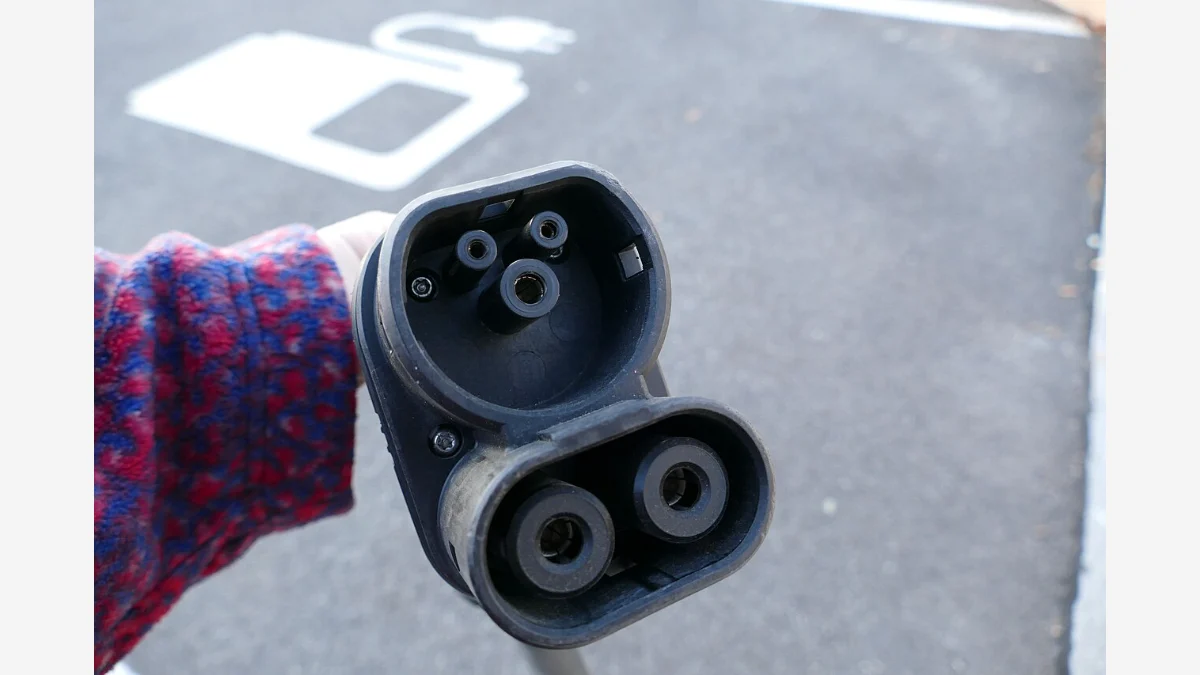
Cover: Kritzolina · CC BY-SA 4.0. WebP conversion and resizing; used within the 16:9 floor without cropping the image. Use and adaptation rights of the image are subject to the license specified; the same license is not claimed for the entire article.
This guide was prepared on 6 October 2026 on the basis of the official support/technical documents linked above. It is an artificial intelligence-supported editorial compilation; it is not presented as a personal product test or measurement in the field.
Resources
- US Department of Energy AFDC - Electric Vehicle Charging Stations · 6 October 2026